Thursday, March 27, 2014

Which is the tail and which is the Dog?

Last night I saw a link posted by my sister on facebook and it brought up something that has been percolating for some time. I was talking to my sister about our very different experiences of conservative Evangelism and how to bridge that gap, and also about our differing epistemological worldview, me more modernist and her more post-modernist. She asked me about the setting for starting constructive conversations about doctrinal disagreements. As I looked back, I realized my initial response didn’t cover this likely pitfall in the language used to start a discussion:

If I was to go to my pastor and say, "I'm really struggling with my feelings about doctrine X and I'd like to talk to you about this," I would mean:
1) I am totally convinced of the truth of doctrine X.
2) I have concluded that Y is the right attitude to take in response to the fact of X.
3) My actual feelings do not match Y and I would like you to help me change my feelings so they do.
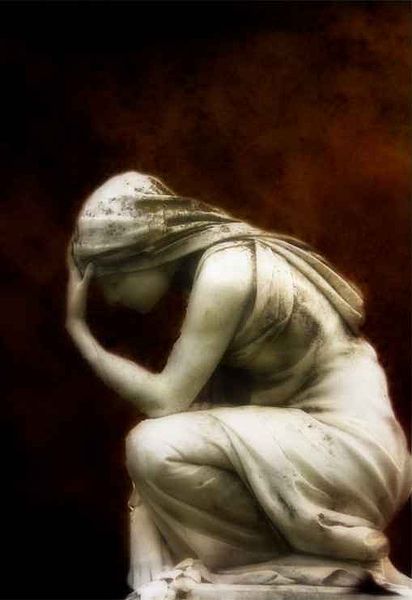
Allegory of Reason, photo by Vitod Muratov

So the correct reaction of the pastor to me would be to help me work out ways I could modify my emotional reaction. But I suspect my sister might use the same phrasing to mean something totally different, that it didn't make advance that X could possibly be true based on it being so to the way things should be as demonstrated by her feelings. She would be expecting a discussion of whether X was really true and might feel horrified and insulted if instead she got advice on how she could change her feelings.

We have these differing meaning to the same words because we reason about things in different ways. For my my own emotions are a tertiary, almost epiphenomenal concern, so I wouldn't be addressing them unless I considered the relevant facts on metaphysics and morals to be settled.

Reading Rachel Held Evans’ Blog about the reversal of World Vision’s decision what struck me was the word “disdain.” People on the liberal side of this discussion are perceiving the reaction as as being driven by emotion and are are experiencing this situation as all the more hurtful because of that. When I was reading the initial reactions on Tuesday I perceived logical reasoning about facts doctrine and moral implications, with a little sorrow and disappointment at where the logic was going trailing along behind. Going back today to a few posts I missed that were pointed out as inflammatory that’s still what I see.
Fragile Emotion, photo by Don

Its a huge gap to communicate across, difference between starting with emotion and assuming it’s the basis for action and seeing emotions as coincidental side effect. But for a long time the gap was almost invisible to me. It’s still hard for me really get my head around such a different way of thinking. But I think the start of clear communication is going to be understanding and considering that difference.

As for World Vision, the fact that they reversed themselves so quick indicates that they did not understand the predictable reaction that they would get. This indicates that they are deeply, deeply clueless about how the broadly conservative strain of Evangelicalism thinks. But then that’s common view and a misunderstanding that’s easy to make.

Sunday, January 26, 2014

Why can’t we just all get along?

    There’s a natural desire to get along with everybody. To not have constant fights going on around you. In today's diverse and connected public sphere, I that natural desire can lead to a wish that there weren’t so many things that some people passionately believe in. A wish that people wouldn’t be so certain of things.
    I like Marc Cortez’s blog post I saw this week about one problem with this. That there are practical reasons for taking a stand on some issues. Our ideas are the foundations of our actions so we have to have decided opinions to act consistently.
    But I also think that being passionate about things is part of being human. You’re not really enjoying the benefits of knowing different people if you’re not ready to confront and deal with their passionately held convictions. Even when they are very different or even directly opposed to your own passionately held convictions. Being ready look at their arguments, dig down to their roots and really understanding what the differences are is part of really seeing and knowing others.

There was a verse in my Bible study lesson this morning I really liked:

John 18:23 (NLT)
Jesus replied, “If I said anything wrong, you must prove it. But if I’m speaking the truth, why are you beating me?”

Sunday, January 12, 2014

Enjoying being Offended - Part 2

We were driving along when my mom apologized to me. She was apologizing for having sounded disrespectful of my religious beliefs in a conversation that had occurred over the holidays. I couldn't think what comment she was referring to. (Having thought about it now there was maybe one comment she made that was a little sarcastic, but that was nothing to the full debating tool box that my sister and I were using. It by far the best time I had that holiday visit.)
She say she didn't want me to think that she disapproved of my spiritual path. I say I had not been offended. We had mutually incompatible ideas about proper spiritual paths and as obviously she would disagree with my choices, and I was perfectly fine with her expressing that.
She said no, she really thought how I was pursuing my spiritual life was fine. I didn't think that could be the case and we want back and forth on that with restocking to her thesis that she really thought my religious pursuits were fine and good as long as I was happy with them.
We went on and had a fun meal at The Counter where I had fun ordering just what I wanted and nothing else. (The Counter specializes in letting you build your own burger rather than offering a limited number of pre chooses combination that I always need them to hold something on.)
But the apology stayed with me. Before the apology I had not been offended at all. But now I found I was. I did feel hurt and disrespected that my ideas were not being taken seriously and that my mother didn’t care whether I was basing my life on the truth or a lie.
Later a practical matter came up where my opinion on the subject was related to the consequences of my religious beliefs. My mother was quite dismissive about my opinion. And I found myself quite hurt by it, not because of the dismissing of my opinion but because it showed how thoroughly she dismissed my beliefs as real beliefs that would have real consequences in all other areas of my life.
This is part of engaging with people and really relating to them on a deep level. being ready for their beliefs to be so different that you are hurt by how they see you, and being ready to deal with that.


Saturday, January 4, 2014

Enjoying being Offended - part 1

I remember my grandmother as a warm comforting presence on those summer vacations. My grandfather and her would come out to California in the summer in their RV. We would do fun things and everyone would get along and then she would make hot chocolate for everyone.
photo by Herrick
I think I must have been a difficult grandchild for her, with inexplicable and occasionally unpredictable dislikes. But I liked how she would like around that. Once she had given up on me going along with something or what would work for me to do, the matter would be dropped and I could just move on from there. It would be like the disagreement had never happened. She was really good at getting us the act like we were in natural harmony with each h other.
She died of breast cancer when I was still a teenager. At a gathering connected with her funeral I was talking to her namesake and in the course of the conversation saying that my grandmother hadn't been perfect. When I was asked how, I pointed out that, while she would create an appearance of agreement and perfect sympathy, it wasn't a reality.
It was based on pretending. If someone said something you disagreed with you couldn't contradict them directly. You had to phrases it as a nuanced agreement so everyone could act like there wasn't a conflict. You could be scolded for being impolite but it was always the form of your expression and not the content of your ideas that was criticized.
Grandma would firmly squelch any topics of real disagreement except ones that were so distant and abstract that no one president was really affected by them. It made for a very comfortable, restful atmosphere. But it was possible because our little family mostly agreed on our general perspective. We were willing to conform our views to a conventional average without really debating anything.
It was a comfortable, safe place for me to retreat. But out want we're I really formed my mind and sharper my ideas. It was a place for recovery rather than growth. But from the outside it presented such a feeling of safety and acceptance that it might.
I think one of the things wrong with public debate today is that there’s an illusion that the whole of life can be like that for everyone. I hear calls for protests over something a public figure said in some magazine. I here whole groups given the identity of “haters” because their tastes or ideas don’t match that of some other group. I see people genuinely upset and hurt because they read on the internet where someone discussed something they identify with in a way my Grandmother would not have allowed one of her grandchildren to be discussed in her living room.
But here’s the thing, my grandmother could only achieve that because she was working with a very small group of people already very alike in tastes and culture. Moreover  the atmosphere was limited in time and space. We could go other places to discuss how we really felt and develop our own opinions.
Expecting to encounter a sampling of people from the real world and not find some dislike your art, disapprove of your choices, or don’t respect the identity you’ve cultivated is setting yourself up for heartbreak. Even just America is too big to be one homogenized culture where there’s a list of values you can endorse and expect everyone to nod their heads in approval. People are really going to disagree with you even on things that are emotionally important to you or that are part of how you identify your place in the world.
The 50s sitcom family where everyone could always be sure that if there would be an apology by the end of an episode was mostly an illusion. And to the extent it wasn’t it is impossible to expand to embrace a group of diverse backgrounds and world view. Instead we need to embrace that fact that we will offend other people and that other people will offend us.

Tuesday, October 1, 2013

The Importance of Symbols Part 2


    In a previous post I mentioned how glad I am that we have widespread literacy and scholarly bible study to keep us connected to the intellectual truths of Christianity. I rejoice in how everyone can have direct access to theology. In how our access to various media can allow everyone’s ideas to be evaluated and critiqued. But I think this luxury has pulled us too much in that direction. Because in the bible I also see God sometimes using elements like
narrative and symbolism to introduce people to his message. I think in some cases instead of diluting the message the additional narrative or symbolic elements can make the message more memorable and relatable.
I was reading The Lord's Supper: Remembering and Proclaiming Christ Until He Comes and I enjoyed it alot. But I did notice not exactly a defect but what I felt was an imbalance. This book is from the Baptist perspective, and while a lot of time was spend on the augments for the primary significance of communion being symbolic (against transubstantiation and related) comparatively little time was spent on the symbolism itself. Now this is a scholarly work so it’s appropriate to focus on concepts and the reality of ideas. However the Lord’s Supper is a very important practice. And I think the importance is in the symbolism. That importance should be overriding enough to make some room for exploring and reveling in the symbolism. I think sometimes our focus is so intellectual that, having affirmed the intellectual truth that the meaning is symbolic, we then don’t know what to do with that symbol.
 
I liked Math in school and there was a certain joke I really like:  There was a chemist a  physicist and a mathematician and an experimenter want to know which is which. He sets up a lab with some papers on fire in a trash can on the lab bench. He sends the men in one by one. This is the mathematician.
photo by Rizzo183
The first two men just grab a beaker of water and dump it in the trash can, putting the fire out. but when the last man comes in he grabs a piece of chalk, quickly calculates the energy released by the oxidation of the hydrocarbons in the paper, the heat conductivity of the metal trash can, and the latent heat of vaporization of water, gets a calibrated pipet and squirts in the exact amount of water needed to extinguish the fire but leave the trash can perfectly dry afterwards. This is the chemist. But the experimenter still needs to distinguish between the physicist and the mathematician. So he sets up the lab again, but this time puts the trash can with the burning paper on the floor. The first man still gabs a beaker of water and dumps it into the trash can. But the next man takes some asbestos gloves and picks the trash can up and puts it on the lab bench. He then leaves, having reduced the problem to one previously solves.
In abstract pursuits you want to boil information into a known fact or an applicable result. But there is more in a symbol or a parable than just a  fact or an application. It can also convey an intuition a feeling or an attitude. I think our modern culture sometimes doesn’t really absorb and value, and even critique those things as it should.

Thursday, September 5, 2013

The Importance of Symbols Part 1

photo by Garitan


I’ve been preparing to be part of a short term mission trip to the Philippines this November. One of the things that has really hit me is how different discipleship is when a majority of the people don’t read. Of course I knew intellectually about situations where this is the case, but all my practical experience is with the situation where bible study is right up there with prayer as a fundamental part of living the Christian life. A person who couldn’t read well was a special case who got extra individualized attention and special aids to allow them to fit into this paradigm.
But in the poorer areas of the Philippines, it’s those who can read well enough to study on their own who are the exception. So I’ve been thinking more about the importance of symbols and how they allow us to interact with new ideas.
One thing it has done is given me a new appreciation for how the medieval church used art. My reaction to this post really crystallized it for me, how different our relationship to sacred art is. We don’t need art to convey the basics of the story to us because we can always read it. I really started thinking about the implications of art as a primary teaching tool. Back then the skill of the artist was very important in making something that everyone could interpret easily. The art would also be very individual. In an era before photocopiers a specific visual version of a story might be unique to a painting or an area.
 
A can also see how easy it would be to fall into message drift. To focus on a martyr with an easily visually identifiable symbol rather than someone harder to make identifiable. I can totally see why there are more pictures of Catherine of Alexandra and her wheel than of Clement of Alexandria. But theological concepts and the mysteries Christ shared with us can also be hard to illustrate. I’m glad we have widespread literacy now to help the church hold onto these more firmly.  


Friday, August 16, 2013

mini-review: 10 Sacred Cows in Christianity That Need to be Tipped

10 Sacred Cows in Christianity That Need to be Tipped is a quick but thought provoking read. It takes a look at some common tendencies and temptations in the modern church and a basic presentation of why they are unbiblical and undesirable.

I did like the boldness issues that are very common and easy to fall into and the way the simplicity of the argument focused attention on the problem without giving the reader an opportunity to be distracted by side issues.

I didn’t like how the book attaches all attempts to take into consideration the human desires for comfort, or familiarity or excitement. While I agree that this should never be the primary consideration nor should these considerations be a constant indulgence, there may be a time and a place for these to be a secondary consideration.


What this book is not:

  •  A rebuttal of all the possible arguments and excuses for the practices criticized
  •  An accusation of any particular person or group as having the criticized practices. (It’s an invitation for the readers to examine their own consciences, not disparage others.)
  • A detailed road map of what to do instead. 

But it isn’t trying to be any of these things. This isn’t a book that does your all thinking for you, but one that gives you a shove away from complacency.


There are certain things that are foundation about the church that don't change through time. But having that foundation makes it necessary and all the more possible and exciting to examine traditions we may have fall into out of habit, or ideas we just took for granted without examining fully. God is continuing to use his Holy Spirit to shape the church and there is always more of his love, his grace, and his holiness to learn about.