Tuesday, December 22, 2020

Game B Intentional Community

 This is a proposed skeletal structure that many communities of approximately 50 to 150 members could use to build an intentional community around. 


1 A goal or value the community is dedicated to.


2 A regular meeting where each member ceremonially affirms their comment to the group and group values.


3 A requirement for high commitment behavior, ideally connected to the community value. 

Things like always wearing unusual clothing, strict dietary requirements, or joining in a one hour dawn meditation each day can cement a community together. They can create a sense of identity, belonging and connection. 

If the comment requires giving money (and at least when this is embedded in a Game A context money might be needed) the level of giving needed to show commitment should be scaled to the member's ability to give. (There can also be a ownership component that I’ll get to later)


4 An internal gift economy based on public gratitude.

There should be an explicit social norm that members give gifts to help the community and each other, and also an explicit norm for publicly announcing gratitude in a specific way. This way might be a social media type site where people tag people they are grateful to and describe the gift, or this could be done through a physical bulletin board or announced at the weekly meeting. It would also be important to a long term records of these gratitude statements in such a way that it would be easy for other members to see a member had given to the community through the years.


There would be a general expectation of reciprocal giving and that ideally everyone would get approximately what they gave in the end. But it would be emphasized that the givers were not specifically owed or promised anything. There would be a firm rule that no one should ever try to put a number on it, should never try to figure out what a give is “worth” and do any sort of accounting on it. The community should never allow the convenience of replacing a complex narrative of the gratitude log, that requires connecting to a real person, with some sort of balance of credits or points that reduces a relationship to a cold and impersonal transaction.


Note: In the western tradition there is an idea of a type of giving that is given with no expectation of return or reward or acknowledgement. It often encourages giving anonymously and gifts that are unconditional as to the worthiness of the recipient. This is coming from the Christian tradition and is primarily about cultivating a growth of Christlikeness in the heart of the giver and not about providing benefits to the community. If this type of giving is also encouraged by the community goals it should be made clear that these are two different types of giving.


5 Mentorship and intentional relationship building

A purposely structured program of mentorships and small groups that creates a network of personal relationships within the community and and reinforces community norms.


One issue that will definitely come up is that since we are there for the work put into the gifts we give they seem more prominent and important. Making sure everyone is getting and giving all the gratitude that is deserved, and the evaluation of gratitude narratives can be agreed on in a shared perspective among community members.


6 Dispute resolution

While major crimes would need to be taken care of by the police, The community should have a preset and published procedure for addressing everything from personal friction to petty crimes between members with a view to both a felt sense of justice and the restoration of community function.


7 Split communal/private ownership

Individual members having some ownership of their own private spaces but also for the community to have a property interest that helps keep the group together. My favorite example of this would be a mobile home park. The intentional community could own or lease the land and build facilities for community members that would make the park attractive to live in. Members could own their mobile homes and potentially take it with them if they ever wanted to leave. Even if a member wanted to sell their home in place, the fact that non-members wouldn’t have access to the park facilities would help with getting it sold to another person qualified and willing to be a community member.


8 Shared meals and community shared space

A least one a week (though usually more often) the community would provide a meal for all the members to come together at. There would also be shared facilities for the members to uses that would draw members together


9  Probationary period

To keep focus and encourage continuous community, new perspective members should have a probationary period of from six months to two years before they become full members


10  Non member dependents

A structure should be set up to make sure children of members are supported. Though should also be given to others, like aging parents, that members might want to bring in and have community support for caring for. The goals of some communities would open the door to taking in local individuals in need the the intentional community as a whole helping support them.


11  Demurrage ownership

These communities are often going to have considerable start up costs, often needing to secure land or make considerable investment in facilities for the community. One way to handle community property is just say that whatever governance structure the intentional community uses for everyday affairs that also applies to any big decisions, like real estate, and that no one has an ownership interest accepts the community as a whole acting through its formal governance. But there are a couple reasons why putting that pressure on the governance structure might not be a good idea. Frist, especially in the initial experiments with such communities, there are going to be a lot of communities that fail. There will have to be trial and error to find the structures that actually build community and promote human flourishing. Even when such communities have more of a track record we want to make sure there is opportunity to start communities with audacious goals or with novel community cultures. It’s going to be a lot easier to attract money if a community that fails after a couple of years isn’t a total loss for members who paid in big at the beginning.  Second, there would often be one of a few community members giving massive amounts at the start with everyone else giving comparatively minor amounts. If you don’t acknowledge this as part of the reciprocal gifting ideal that you are undercutting the whole idea, but if you do then a few members are starting out with a huge imbalance that is going to make the community dynamics off kilter. 


So I think there should be a sort of demurrage ownership where some members can buy in and retain something like an ownership interest in a proportion amount of the community property, but this ownership would decay over time in one way or another. 


Advantages to this type of Community


  • The community itself. People are hungry to know and be known. This community gilded you into real relationships there for bond with others, mutually rely on them and help each other grow in a way a lot of people are looking for. 


  • Tax benefits. Barter systems that use any kind of currency substitute are taxable and if they are successful enough the tax man will come after them and force them into being just a proxy for the money economy. But in a gift circle of small non-monetary gifts, where there is genuinely no amount of credit or specific thing expected in return, has a much stronger argument for not being taxable. I expect that sooner later there will be calls to destroy such gift networks for not being taxable. But if these can be resisted, having a bunch of community support that is outside of the money economy will be a big advantage to members.


  • Diversity. A lot of different goals and values can be used as focuses for these intentional communities, so all sorts of different communities can be formed. There can be a seeking spiritual enlightenment community and an anti-woo community. There can be a living in nature community and the sleek technical solutions community. This community structure will a huge amount of diversity to be pursued within the same framework.


  • Networks. Since these communities are within the same framework the will have enough in common to build communities of communities. There can be networks of communities with similar goals or complementary goals. There will be a foundation to build a web of communities with mutual respect and cooperation.


  • Winning against a Game A world. These communities can function within a Game A world without being drawn into it. With these communities providing and example people who don’t care about Game B or who have never hear of Game B will think:

    • “I want warm loving relationships and a silence of community. I work and Game and and get money and then try to use money to get community. But might be simpler to join one of these Game B things.”

    • “I want to pour my life into goal X. I could try to accumulate a pile of money and use it for goal X. But if might be quicker and more certain to just find or found a Game B style community focused on goal X.”

    • “I want security, to be protected and taken care of if things go wrong. I could try to use my money to buy that protection, but what if the money system is one of the things that goes wrong. Maybe buying into a Game B community is a good option to have.


Friday, November 20, 2020

Orientations create their Opposites

 But why is it that Western cultures have so much abundance? Yes, at any given moment for any given individual, you find scarcity or abundance in the environment. But human beings overtime shift their environments. So where does the scarcity or abundance come from? what generates it? And for that matter what generates scarcity?

To answer that let's look at what a scarcity or abundance mentality generates. The first thought would be that an orientation generates that which it prefers to deal with. But that is not the way to make scarcity or abundance profitable.

To deal with abundance successfully, you find ways to use as much of the abundant material as possible you find ways to make it more valuable and useful in more situations. You make a habit of gathering me abundant material quickly and without regard to wastage. You encourage as many people as possible and make a habit of using the abundant material. You make the abundant material an artistic medium and a point of cultural pride. Do this successfully, and the abundant material will be totally ubiquitous and a foundational necessity for many processes.  You keep finding more and more uses for the abundant material until finally it becomes scarce.

To prophet from scarcity you go beyond just building up stock piles. You find more efficient and more reliable ways of procuring the material.  You take risks to scout out new sources of the material. To use the material sparsely and get as much out of it as you can.  You find places where you can use substitutes for the scarce material. You create structures and hierarchies for controlling the flow of the material. You create a system that allows your culture to distribute the rare material in a stable equilibrium. You may or may not succeed and actually creating a surplus of the scarce material, but, in acting to respond to scarcity, you will create so much productivity that the result will be abundance.

Carmina Burana- The Wheel of Fortune

So there will be an oscillation cycle. As scarcity oriented societies create abundance and then adapt to the abundance they have created by becoming abundant orientated societies. And then the abundant orientated societies will create scarcity. And this society will adapt to the scarcity, becoming once again a scarcity oriented society. And then the cycle repeat again.

Saturday, July 18, 2020

Our Culture is Abundance

Now I want to look at the other side of the coin. Many English speaking, blog reading, cultures are W.E.I.R.D.O. cultures. They are Western Educated Industrialized Rich Democratic Out-breed cultures. As noted by the word “rich” in the acronym one of the things that characterizes these cultures is that they generate a tremendous amount of abundance. The traits industrialized and educated, and maybe some of the other traits, produce a plethora of material goods as well as opportunities. People growing up in such a culture are going to encounter an abnormally high level of abundance  all around them. They are going to find that the opportunities to deal with abundance, and be rewarded for it, are much more common than the opportunities to profitably deal with scarcity. Experience will teach them much more about dealing with abundance.

Though some individuals may have an inborn disposition towards abundance or scarcity, humans, as a species, adapt to our environment. Some environments call for mainly scarcity specialists and some for mainly abundance specialists.  young people find their competitive advantage in filling the gaps between what the environment calls for and what their culture already provides. So over time the balance of specialists in a society will adapt to what its environment calls for. A weirdo culture will end up having mostly abundance specialists.

Although we will still be tilted much more towards scarcity due to being human, Western cultures will be tilted much more towards abundance then the human average. As democracies we will tend towards the median of our populations, and therefore, we will as a society be prepared for abundance, expect abundance and have societal structures that are designed to work with abundance. And as we get more and more abundance in our society the percentage of people specializing in abundance will continue to grow.

Tuesday, June 9, 2020

Humans are Scarcity

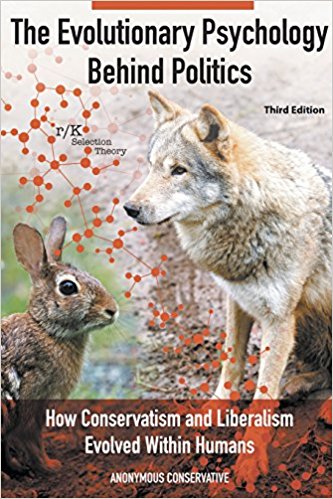
I want to pull back to the big picture, comparing humans to the other types of animals on the planet. In biological terms humans are very much k-selected. It is more than 10 years before they are biologically mature; no other animal is more slow life history strategy than that. This corresponds with us being scarcity specialists. We have a digestive system optimized for cooked food, which are not at all abundant in nature. Yes, we can survive in all sorts of climates and environments. But to do this human cultures universally require items they have to be construct rather than found in nature, items like clothing, tools, weapons, and shelter. Our biology is designed for scarcity seeking to a truly ridiculous extent.
r/K selection theory


Humans have inborn biases like noticing that  something is scarce and desiring it because it is scarce. We have expectation that things we want will take cleverness, foresight and long term planning to obtain. We often feel a certain thrill at taking calculated risks. As a species we show scarcity seeking behavior.

We also have lots of adaptations allowing us to succeed at this quest. We are social animals predisposed towards forming cooperative groups. We expect groups to have systems and rules in fact we have the mental ability to both discern and create a layer of socially constructed reality. This layer of socially constructed reality allows us to both track and manipulate social agreements and social hierarchies. We naturally notice patterns and can analyze complex situations. We have instincts for evaluating risk. We have imaginations that allow us to plan for multiple contingencies. These combined into a formidable suite of talents for managing scarcity.

This doesn't take away from my point that there is a lot of variety in orientation among humans. But to see that variety, you must filter out the background information that most humans naturally have a lot of tools for scarcity exploitation. These tools may be more developed among a scarcity oriented segment of the population, but we would not expect them to be entirely absent, even in abundance specialists.

Thursday, May 14, 2020

Interlude: This isn’t black and white, it’s a spectrum

One little note I want to put here. I've been talking about as if the world is mainly made up of a bunch of pure abundance specialists and pure scarcity specialists. And I’m going to keep on doing this. There is a trade off of how abundance specialized you can be against how scarcity you can be. But I want to acknowledge that you can compromise, you can make that trade off. Most people out in the real world do make some sort of compromise and are not fully specialized. Some people can even have at least a little bit of both specializations. So while I’m focusing on pure types keep in might this is a simplified version that will provide a base for discussing a more complicated reality.

Sunday, May 10, 2020

abundance vs. scarcity: The sources

I mentioned in the first post that people have been talking about abundance vs. scarcity as a liberal and conservative tendencies. But that’s a simplification. People have been poking at what is beneath political dispositions and I want to go over some of the ideas I’m building on in thinking about Abundance vs. Scarcity.

The first thing I remember getting me started thinking about this is Scott Alexander's Thrive vs. Strive theory. This basically the idea that the rightist position is to take actions that would be most useful in surviving in a desperate situation and the leftist position is to do what would make sense to do to thrive the most in a secure situation. I liked a lot of this idea including this quote:
The rightists will ask: “So you mean that rightism is optimized for survival and effectiveness, and leftism is optimized for hedonism and signaling games?” And I will mostly endorse this conclusion. On the other hand, the leftists will ask: “So you mean rightism is optimized for tiny unstable bands facing a hostile wilderness, and leftism is optimized for secure, technologically advanced societies like the ones we are actually in?” And this conclusion, too, I will mostly endorse.
But I also feel this tends too much towards giving the impression that for any given circumstance there is one right balance that everyone should adopt; rather than there being synergistic advantages to having a mix of perspectives. I also think conservative tendencies naturally lead to advantages beyond bare survival. 

I was also aware of some aspects of the different versions of Robin Hanson’s Forager vs, Farmer theory of political tendencies. That most civilizations had to develop a farmer moral that was more rule based and hierarchical as they became dependent on agriculture and the long term planning it required. But that as the industrial revolution made countries more prosperous and safe it allowed the resurfacing of an older and more fundamental moral instinct that is more about cooperation and social bonds. This idea interested and intrigued me but I was uncomfortable with the implication that this was just a triggering of old presets that weren’t truly relevant to today’s situation.

But there was a connection to theory connecting political leanings to evolutionary ideas like r/K and fast life history strategy vs. slow life history strategy. This is where you look at living organisms in general and see there is a dichotomy between organisms that put all their energy into having as many offspring as quickly as possible (r strategy), and those who husband there energy to having and raising a smaller number of higher quality, better prepared offspring who have a higher individual chance of survival (K strategy). And then try to draw an analogy to certain human behavior patterns that are reminiscent of one biological strategy or the other.  I thought there seemed to be something here, but what it was felt confused. Perhaps because the differences among humans are so small compared to the vast difference between different types of animals.

Then I saw Jordan Hall discussing rivalrous vs. anti-rivalrous commodities. Including the idea that with rivalrous goods for one person to have more another person had to have less, but that this was not the cause with anti-rivalrous goods. There is a lot more to Jordan Hall’s concept than that. But the way he talked about it got me thinking of different types of commodities and people having different strategies that were correlated with the type of commodity they were dealing with.

I think all these ideas are worth looking into in their own right as well as having some bearing on how abundance or scarcity specializations drive us.

Monday, April 20, 2020

How deep does Abundance vs. Scarcity go?

So why does Abundance vs. Scarcity have to be either or? Couldn’t you just determine, in each situation, what pattern is fit and apply the right assumptions for that pattern? There are a couple different reasons why I think these specializations are best implemented as fundamental dispositions, as attitudes that are at the very core of personalities. The first has to do with Relevance Realization and the second with consistent, habitual action.

I’m using Relevance Realization to reference the concept John Vervaeke has developed. He has a whole lecture series developing this and related ideas, but the aspects I find important to the sequence of posts is how Relevance Realization is the answer to the problem that in real life, there are generally too many possibilities to consider all of them. If someone has to explicitly consider every possible consequence of an action to see if it is relevant, then, even if you are very very quick at making that consideration, it will take you practically forever, since the number of possible consequences is so large it might as well be infinite.

So humans need some way to narrow the field of things to consider that isn’t dependent on logical elimination. You need to just see it. You need to just Realize, in a way that is prior to your conscious rumination, what possibilities are Relevant. There’s no simple process to go back, after you’ve made a considered categorization of the situation, and re-do your Relevance Realization. You’ve already set your frame. Your automatic processes have already picked the things you are going to use in your conscious analysis.

People who haven't specialized are likely to miss important things about an abundance situation that scarcity specialists would see and things about a scarcity situation that a scarcity specialist would see. It will take a big breakthrough, something that shakes up their whole way of thinking and scrambles their assumptions, to let them pick up those details as relevant after they have rationally evaluated the situation as abundant or scarce. The only sure way to pick out the urgent, prominent characteristics of an abundant situation is for an abundance specialist to look at it, and likewise for a scarcity situation. Because those prominent characteristics just won’t be prominent to a non-specialist, they won’t stick-out and seem salient to weigh heavily in decision making.

The basic meaning of ‘salient’ is something that sticks outward so it is noticeable. In the military it is used of a situation where soldiers’ positions stick out towards the enemy relative to the rest of the battle line. It is a focus of both opportunity and danger. The perspective you take on them can make a lot of difference.

All this has assumed that we have a long time to consider and evaluate and consider again. But the other reason why an abundance or scarcity specialization needs to be deep set and long lasting, is that we can’t take that amount of time for most decisions. There are so many small routine decisions we make each day that most of them are made in seconds. We do this by having the basic frame and context of such decisions largely made beforehand. Stop to chat with the neighbor this morning? Put some extra tomatoes in the shopping basket? Empty the garbage now or wait til later? We make so many decisions each day that we don’t even think of as decisions. Having a set of orientations and pre-set assumptions not only allows these many decisions to be made in a reasonable amount of time, it creates a coherent strategy where the decisions support each other in a general direction toward a coherent set of goals. It creates a personality of how you approach socializing, resource management and schedule organization.

These are habits of thought that take time to develop and time to break. You can’t switch personalities and relational styles based on what sort of resource you are dealing with today. If you want to reap the long-term benefits of consistent specialized strategy you’ve got to let the disposition settle in for the long term and sink roots deep into your fundamental assumptions. So while there can be non-specialists who think about abundance and scarcity in a post Relevance Realization way and make use of understanding them on the surface layers, there will still be advantages to those who build a specialization into the base layers of their personalities.